

Inventory Storage in China for Ecommerce Brands
What Is Inventory Storage?
Inventory storage is where your stock waits between the factory and your customers. It also covers how that stock is kept, labeled and counted. For an online brand, it might be a spare room, a rented unit, a US warehouse or a warehouse in China. The right inventory storage solution depends on your sales, how far stock travels and what each option really costs.
FF Logistics offers ecommerce inventory storage in our China warehouse. We then pick, pack and ship each order to customers worldwide. Your suppliers deliver straight to us, and we ship from that stock as orders come in. Storage is one of our 3PL value-added services, next to the packing and shipping of our China fulfillment service.
Small Business Inventory Storage Options Compared
Most brands move through these options as they grow, and many also use two at once. Here’s how they compare for business inventory storage when your products are made in China:
| Option | Best for | Who packs orders | Watch out for |
|---|---|---|---|
| Home, garage or spare room | Your first few hundred orders | You | Space, your own time and limited home insurance cover for business goods |
| Self storage unit | Extra room close to home | You, after a drive to the unit | Rules on deliveries and on working inside units, which vary by facility |
| Shared or on-demand warehouse space | Short-term overflow | The warehouse, if it offers picking and packing | Minimum terms, receiving fees and how quickly space opens up |
| US 3PL warehouse | Fast domestic delivery of best sellers | The 3PL | Monthly storage fees, plus duties usually paid on the whole shipment when it’s imported |
| A 3PL warehouse in China, like ours | Brands whose products are made in China | Us | Longer delivery times than from a US warehouse, and which products each shipping line takes |
When you outsource to a 3PL, the warehouse packs and ships too, so you stop paying with your own time. Until then, check your home insurance. The Insurance Information Institute says a typical homeowners policy covers only $2,500 of business equipment. So stock at home may need cover of its own.
Why Keep Ecommerce Inventory Storage in China
Holding stock where it’s made changes the math on restocking, duties and space.
Stock Sits Where It's Made
Your suppliers deliver straight to our warehouse, so new stock is ready to ship once it’s received and checked. Restocking means a delivery from your factory, not another container crossing an ocean.
Duties Paid as Orders Ship
Stock in China hasn’t been imported anywhere yet. So any duties are paid parcel by parcel as orders enter your customers’ countries, with DDP options. A regular US warehouse, by contrast, means paying duties on the whole batch when it’s imported.
Help with Big Production Runs
Factory minimums can mean ordering more than you’ll sell in a few months. Keep the extra units with us, where storage is free for 90 days, and ship them as orders come in. For very large runs, tell us your volumes first.
Ready for Chinese New Year
Most factories stop for 1 to 3 weeks around Chinese New Year, on February 6 in 2027. Full output often returns 4 to 6 weeks after New Year’s Day. So build stock here before the break, and ask us for our holiday dispatch dates.
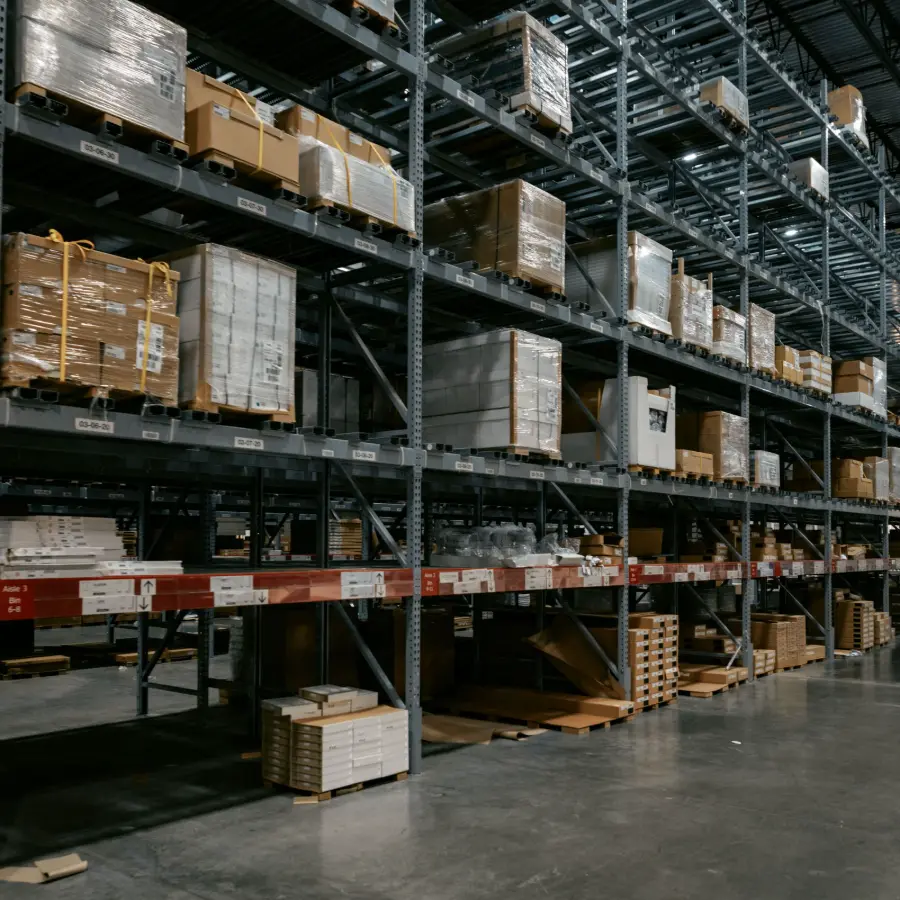
Overflow and Excess Inventory Storage
Overflow storage is extra space for stock your main storage can’t hold. Brands need it for peak season, a big production run, Chinese New Year or a product launch.
With us, excess stock waits in our China warehouse with the rest of your inventory. We ship it to customers as orders come in. Tell us your volumes and dates early, and we’ll confirm the space before your suppliers ship.
Ask Us About These Storage Needs
Some needs depend on your products and volumes, such as bulk warehouse storage for full pallets. Tell us what you need, and we’ll confirm what we can do before your stock ships.
- Storage without fulfillment
- Storage past 90 days
- Full pallets and container loads
- Temperature-sensitive products
Storage is free for 90 days, and these four needs are where we check the details with you first.
How Our Inventory Storage Works
Here’s how stock moves from your factory into storage and out to your customers. We’ll agree on the details of each step with you at setup.
1. Tell Us What You'll Store
Share your SKUs, carton sizes, volumes and how fast each item sells. Then we'll agree with you on how your stock is stored and how much space it needs.
2. Suppliers Deliver to Us
Your factories deliver straight to our China warehouse, and supplier consolidation turns deliveries from several factories into one inventory. Receiving and checking inbound stock is free.
3. Stock Is Managed by SKU
We manage your inventory by SKU. Once your store integration is set up, you can view stock levels in real time.
4. Orders Ship from Stock
When an order comes in, we pick, pack and ship it, usually within one day. The tracking number then goes back to your store.
5. Reorder on Time
Watch your stock levels and reorder before you run low. Since your factory delivers to us directly, restocking doesn't wait for an ocean crossing.
6. Adjust as You Grow
Add overflow stock before peak season, and clear slow sellers before they pile up. If you need to, stock can also go back to your supplier.
How Much Inventory Storage Costs
Storage providers bill for the space your stock takes up, per pallet, bin or shelf, or by cubic foot or meter. Receiving, handling and long-term storage fees come on top, so compare whole quotes, not just the rent. Typical prices look like this:
| Storage option | How it’s billed | Typical price |
|---|---|---|
| North American 3PL pallet storage | Per pallet per month | About $20 on average, with most warehouses at $18 to $25 |
| North American 3PL storage by volume | Per cubic foot per month | About $0.46 |
| North American 3PL bin storage | Per bin per month | About $3 |
| Receiving at a North American 3PL | Per pallet received | About $10.50 |
| US self storage unit | Per unit per month | About $133 for an average unit |
| Our China warehouse | By the space your goods take up, per pallet or cubic meter | Free for 90 days. Ask us about longer storage |
The 3PL figures come from a 2025 survey of more than 600 warehouses across North America. The self storage figure comes from Yardi Matrix data for September 2026. Rent is only part of the bill, though. Carrying costs add up storage, the money tied up in stock, insurance and the risk of items going unsold. They’re often estimated at 20% to 30% of inventory value a year. So $50,000 of stock can cost $10,000 to $15,000 a year to hold. Holding less slow-moving stock often saves more than a cheaper rate.
How to Organize Your Inventory
In a spare room or a warehouse, the same habits also keep stock easy to find and ready to sell.
Assign each product a fixed location, such as a shelf or bin code, and record it. Then anyone can find an item quickly, which matters most when you carry many SKUs.
Put the SKU, size and barcode on every bin and carton. Scanning a barcode beats reading handwritten labels, especially when variants look alike.
A small share of products usually drives most orders. So keep those nearest the packing area, and move slow sellers to higher or deeper spots.
Send out older stock before newer stock, so nothing ages on the shelf. For products with dates, such as skincare, ship whatever expires first.
Instead of one big yearly count, check a few locations each week. Small counts catch mistakes early and keep your store's stock numbers accurate.
Use shelving or pallets, keep heavy items low and close open cartons. Damp, dust and crushed boxes all cost you sellable stock.
Inventory Storage Apps and Stock Tracking
A spreadsheet works for a few SKUs, but most brands outgrow it. Inventory tools in your store platform or a warehouse management system track stock by location. Many can also warn you before you run low. With your stock in our warehouse, you can view stock levels in real time.
Tell us which of these habits matter most for your products, and we’ll tell you which ones we can follow.
Storage Tips by Product Type
Different products also need different care while they wait. These are the basics to agree on with any warehouse:
| Product type | How to store it | What to agree on |
|---|---|---|
| Clothing and T-shirts | Folded in polybags, sorted by size and color, away from damp | How sizes are kept apart, so the wrong size never ships |
| Jewelry and high-value pieces | In small bins or bags, with anti-tarnish bags for silver, in a secure area | Who can reach them and how often they’re counted |
| Glass, ceramics and fragile goods | In their original cartons with padding, never stacked too high | How they’re cushioned when packed for shipping |
| Heavy items and small appliances | On low shelves or pallets, with the weight at the bottom | Box sizes and each shipping line’s size and weight limits |
| Beauty and skincare | Upright, away from heat and direct sunlight, with batch and date labels visible | How batches and expiry dates are tracked |
| Electronics | Dry, in their original boxes, away from heat | Which battery products each shipping line takes |
Tell us what you sell, and we’ll confirm how we can store each product.
How Much Stock Should You Keep?
Too little stock means missed sales, and too much means paying to store products that don’t sell. A reorder point sets the balance. Reorder when stock falls to your daily sales times your restocking lead time, plus a safety buffer.
Say you sell 20 units a day, and you keep 10 days of safety stock. Your factory needs 30 days to make a new batch and 3 days to deliver it to us. That’s 20 units × 33 days = 660 units, plus 200 units of safety stock, so you reorder at 860 units. Before peak season or Chinese New Year, raise the buffer to cover the extra demand or the factory break.
Then review slow sellers regularly, such as every quarter. Stock that hasn’t moved may need a discount, a smaller reorder or a trip back to the supplier.
Inventory Storage Rules to Know
Where your stock waits affects duties, liability and what a warehouse may accept. Some rules apply wherever your stock waits, and others only when a warehouse stores it for you.
Duties Start at the Border
Import duties are owed when goods enter a country, not while they wait in China. Since 2025, low-value parcels from China no longer enter the US duty-free. The EU changed its rules too. Since July 1, 2026, online orders in parcels worth €150 or less pay a flat €3 duty per type of item.
Warehouses Owe Reasonable Care
Under the Uniform Commercial Code, a US warehouse is liable for loss caused by its failure to take reasonable care. A storage agreement can cap the amount. China's Civil Code also holds a warehouse liable for poor storage. It isn't liable when damage comes from the goods' nature, packing that misses the agreed standard or an expired shelf life.
Hazardous Goods Must Be Declared
China's Civil Code covers flammable, explosive, corrosive and perishable goods. Whoever puts them into a warehouse must explain what they are and provide documents. Otherwise, the warehouse can refuse them. Lithium batteries and aerosols also follow dangerous goods rules in transport, so check with us before you send them.
Supplements Need FDA-Registered Storage
A foreign warehouse that holds supplements last before they ship to the US must register with FDA as a food facility. It must also name a US agent. So ask any China warehouse for its registration details before it stores your supplements.
Origin Marks Stay On
Stock bound for the US may be relabeled or repacked while it's stored. Even then, each item or its container must still show its country of origin. US law penalizes removing or covering a required mark to hide where goods were made.
Dates Matter for Beauty Stock
US cosmetics don't need expiry dates, but EU labels need a best-before date or a period after opening. So keep batch and date details with stored beauty products. We record the expiry date of every product, and batch numbers when you need them.
What to Ask Before You Choose a Storage Provider
Storage quotes look alike until you ask the right questions. Month-to-month terms are getting harder to find, too. In the same 2025 survey, about 30% of warehouses offered them, down from about 57% in 2024. Before you sign, ask:
- How long is storage free, and what does it cost after that?
- Are partial pallets billed as full ones?
- Which receiving, handling and long-term storage fees apply?
- Is there a minimum monthly spend or contract term?
- How is stock counted, and how do you see stock levels?
- Who pays if stock is lost or damaged in the warehouse?
- Which products can't be stored or shipped?
- Can stock go back to your supplier, and at what cost?
If we don’t offer something you need, we’ll tell you before you sign.
Free Storage
Minimum Order Quantity
Order Fulfillment
Fast US Express
Why Brands Choose FF for Inventory Storage
Your inventory storage is free for 90 days, and there's no minimum order quantity to get started.
We receive and check inbound stock at no charge, so new batches don't add receiving fees.
We manage your inventory by SKU, and you can view stock levels in real time.
Orders usually ship within one day, so stored stock reaches your customers quickly.
Deliveries from several factories become one inventory in our China warehouse, ready to ship together.
Our fast express option reaches US customers in 2 to 4 days, with economy and dedicated-line options too.
FF Logistics helped us speed up deliveries to Europe. Orders arrive faster, and our customers love the experience.

Inventory Storage FAQ
What Does Inventory Storage Mean?
Inventory storage means keeping stock safe, organized and easy to count until it sells. It covers where the stock sits, from a spare room to a warehouse, and how it’s labeled, tracked and protected. For online brands, it often means a fulfillment warehouse that also ships the orders.
What Is an Overflow Warehouse?
An overflow warehouse holds stock your main storage can’t fit, usually for a season or after a big production run. Brands use one before peak season or ahead of Chinese New Year, then scale back once the extra stock sells. As a result, it’s short-term, flexible storage rather than a second home for all your stock.
How Much Does Inventory Storage Cost per Month?
3PLs in North America charge about $20 per pallet per month on average. Some bill about $0.46 per cubic foot or $3 per bin instead, and receiving fees come on top. In the US, an average self storage unit rents for about $133 a month. With us, inventory storage is free for 90 days. Ask us about longer storage, and we’ll confirm the details for your volumes.
How Do I Store Inventory for an Online Store?
Give every SKU a fixed, labeled location, keep best sellers nearest the packing area and ship older stock first. Track stock in your store platform or a warehouse system, and count a few locations each week. Once orders outgrow your space, 3PL fulfillment stores and ships for you.
How Should I Prepare Inventory for Storage?
Pack each SKU in sturdy cartons with the SKU, quantity and barcode on the outside. Seal anything that dust or damp could spoil. Before stock arrives, share a packing list and product details with your warehouse. That helps it plan receiving and check counts quickly.
Is Long-Term Inventory Storage Worth It?
Only for stock you’re sure will sell, such as seasonal lines or a bulk run bought at a better price. Holding costs are often estimated at 20% to 30% of inventory value a year. So long-term warehouse storage pays off only when the saving beats that. Our storage is free for 90 days. For longer storage, tell us your volumes, and we’ll confirm what we can do.
Do You Offer Storage Without Fulfillment?
Our inventory storage is built around fulfillment: we store your stock and ship each order to your customers. Need storage on its own? Tell us your products, volumes and timing, and we’ll confirm what we can do.
Who Pays If Stored Stock Is Lost or Damaged?
We compensate parcels lost or damaged in transit at twice the shipping fee. For high-value goods, we can arrange extra insurance for shipments, with compensation up to the insured value. For stock inside our warehouse, ask us how losses are handled before it arrives. Check your own business policy too.
Do You Offer Climate-Controlled Inventory Storage?
We don’t list climate-controlled storage as a service. Some products, such as wax goods or some skincare, need a set temperature or humidity. Tell us before they ship, and we’ll tell you whether we can store them safely.
Is There a Minimum for Inventory Storage?
There’s no minimum order quantity to start with us. Tell us how much stock you’ll send and how fast it sells, and we’ll confirm any storage terms with you.
Start Your Inventory Storage in China
Tell us what you sell, how much stock you’ll send and how fast it sells. We’ll come back with a storage and fulfillment quote for your volumes.